


 English
 Vietnam


On the afternoon of August 27, 2026, the Hanoi Party Committee held a thematic training conference on artificial intelligence (AI) applications and digital economy development in 2026. The conference took place in person at the Hanoi Party Committee’s main venue and was simultaneously connected online to agencies, units, and localities across Hanoi and Lao Cai Province.
The conference was held across 462 locations, with approximately 29,000 delegates in attendance. Of these, Hanoi accounted for 362 locations and approximately 25,000 delegates, while Lao Cai Province had around 4,000 delegates participating.
The conference aimed to provide participants with updates on the latest knowledge and emerging trends in science and technology, innovation, digital transformation, the digital economy, and artificial intelligence. It also sought to strengthen digital capabilities and the application of technology in leadership, governance, and management, thereby contributing to greater effectiveness and efficiency across the administrative system, improving services for citizens and businesses, and advancing the goal of double-digit economic growth.
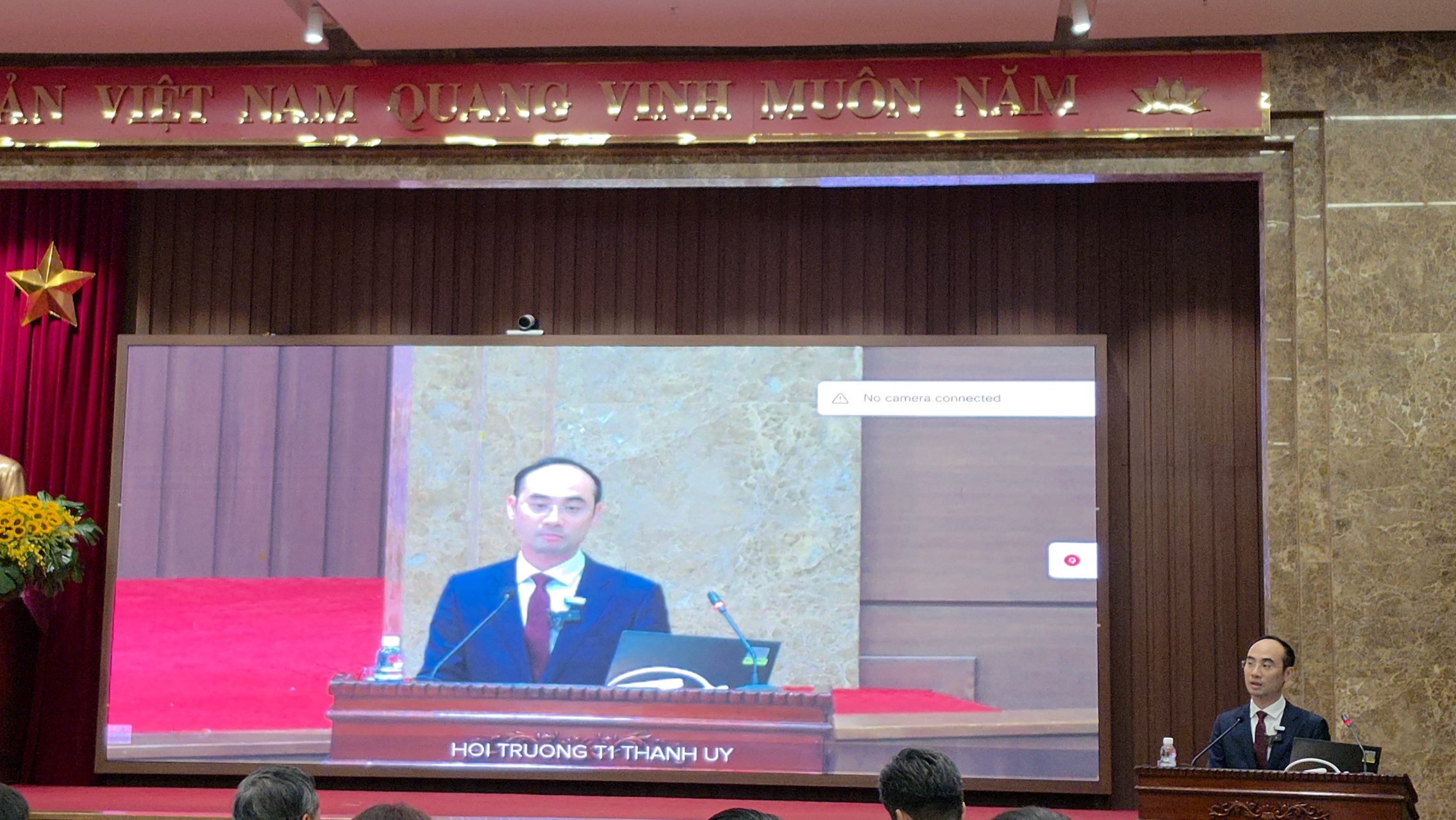
Mr. Đỗ Hữu Hưng, Vice President of the Vietnam E-Commerce Association (VECOM), attended the conference at the Hanoi Party Committee venue.
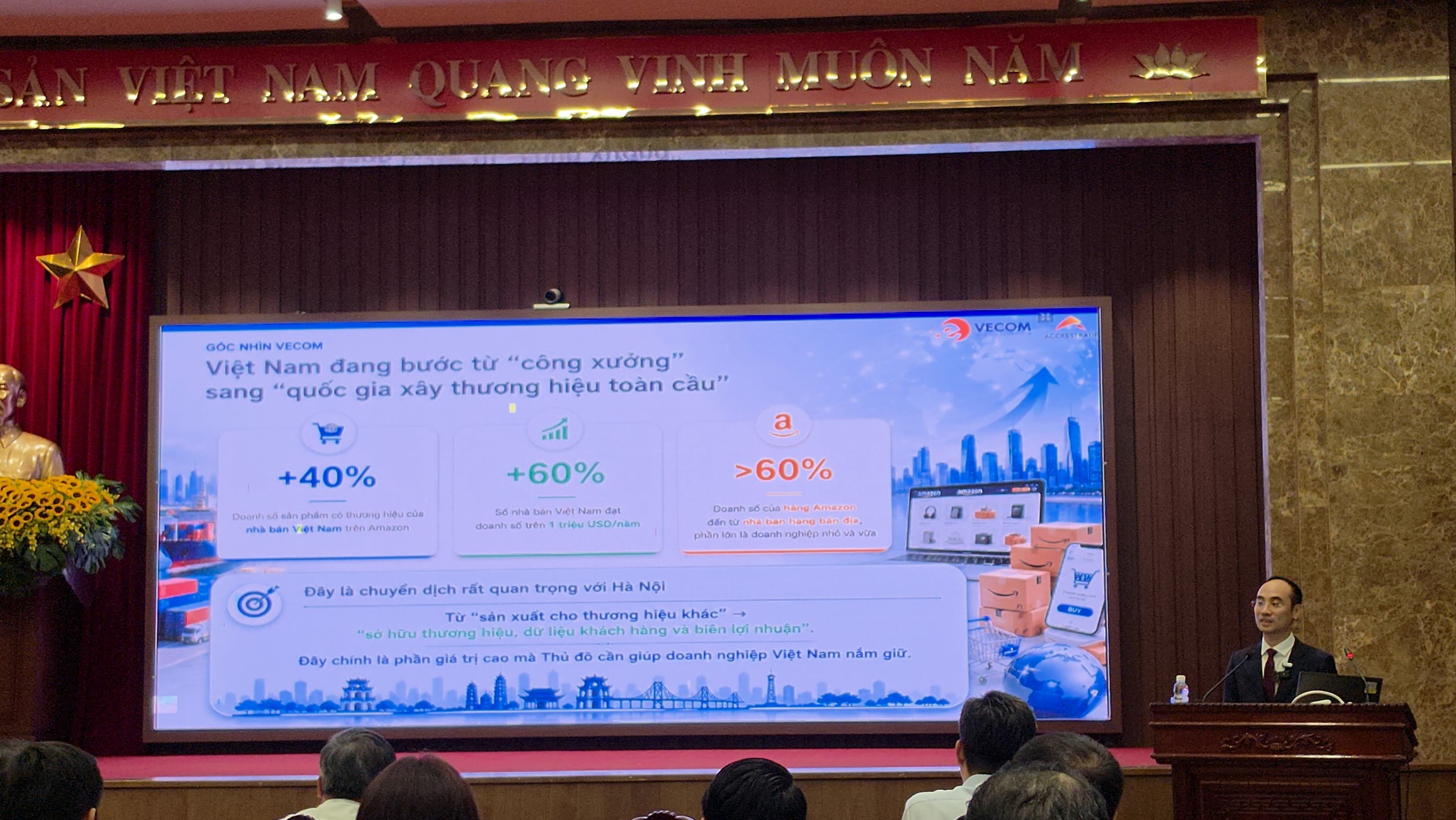
Speaking at the conference, VECOM Vice President Đỗ Hữu Hưng emphasized that Hanoi must shift from the mindset of developing “Hanoi’s e-commerce” toward establishing the capital as Vietnam’s hub for digital commerce and services trade, with regional and international reach. Accordingly, Hanoi should not only help local businesses expand their online sales but also become a hub for capital, technology, artificial intelligence, logistics, digital platforms, and international buyer networks, thereby enabling Vietnamese businesses to enter global markets.
Assessing the current situation, Mr. Hưng noted that Hanoi possesses significant strengths in technology, highly skilled human resources, research institutes, educational institutions, businesses, and financial organizations. However, technology has yet to be integrated deeply enough into the real economy. The main bottleneck, he said, is not a lack of technology, but the ability to translate technology into tangible revenue, productivity gains, and added value for individual sectors, businesses, and localities.
To drive meaningful change, the VECOM Vice President stressed the need to revise the way e-commerce and digital economy development programs are evaluated. Outcomes should not be measured solely by the number of training courses delivered, accounts opened, or programs organized. Instead, they must be reflected in revenue, order volumes, transaction value, productivity, customer data, and businesses’ capacity to expand into new markets.
According to Mr. Hưng, e-commerce should not be understood merely as listing products on online marketplaces. Each locality should identify one or two growth pathways aligned with its competitive advantages, including nationwide retail, online business-to-business (B2B) commerce, exports through digital platforms, or the effective use of existing customer bases. If a program stops at simply “getting products onto marketplaces,” the locality has completed only a small part of the broader process required to generate sustainable growth.
Digital commerce development must be implemented through an integrated process, from selecting core products and assets to developing brand stories, producing content, activating creator networks, organizing sales activities, providing customer care, and encouraging repeat purchases. “Growth only occurs when content, distribution, transactions, customer data, and repeat purchases come together,” Mr. Hưng observed.
Citing practical models that have already been implemented, Mr. Hưng said that a network of more than 30,000 content creators could generate between 1.5 and 2.5 billion views per month; a single MegaLive session could generate more than VND 10 billion in revenue; and cross-border livestreaming has already been deployed across several Southeast Asian markets. These results demonstrate that content creators, employees, members, and local communities can all become part of a digital distribution network when activities are systematically organized, supported by appropriate incentives, and evaluated against measurable outcomes.
Regarding implementation priorities, the VECOM Vice President proposed that Hanoi focus on five key growth areas: digitally enabled craft villages; tourism, culture, and cuisine; digital services and content; B2B commerce in industrial clusters; and cross-border commerce leveraging the advantages of Noi Bai International Airport. Localities do not necessarily need to pursue all five areas simultaneously. Instead, they should select sectors in which they possess clear advantages, develop practical models, and concentrate resources on producing measurable economic results.
According to Mr. Hưng, Hanoi’s advantage does not lie in attempting to undertake every activity on its own, but in its ability to bring together and effectively coordinate institutional, intellectual, business, financial, technological, and logistics resources. This will provide an important foundation for Hanoi to gradually become a digital commerce hub, supporting Vietnamese products, services, brands, and business capabilities in reaching global markets.
 Tags:
Tags:


